Sep 11, 2026
Reverse Osmosis Pretreatment: Feedwater Data Required Before System Selection
Learn which feedwater tests are needed before selecting RO pretreatment, including salts, hardness, silica, metals, organics, SDI, microbes and operating variability.
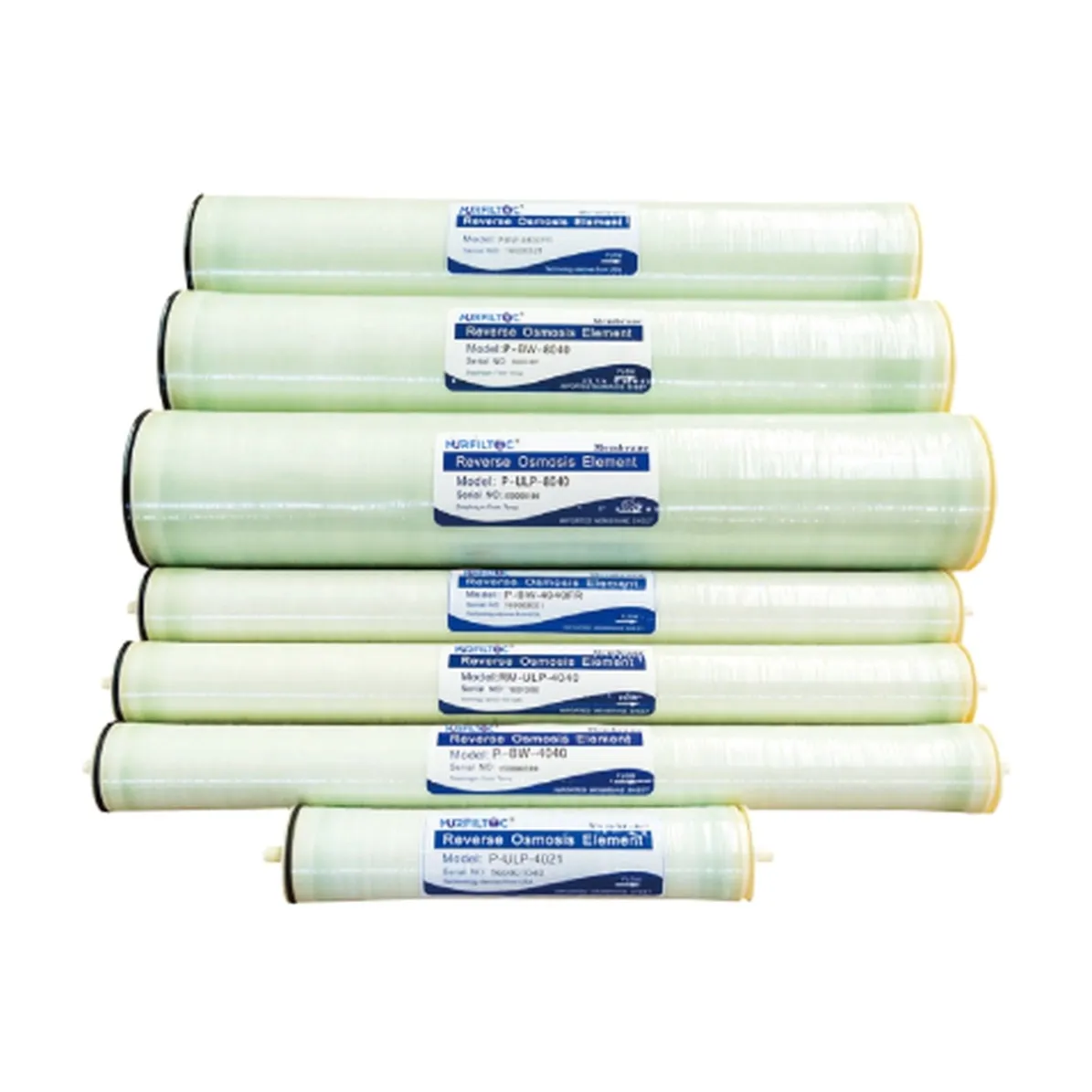
An RO proposal should not begin with membrane quantity or pump power. It should begin with the feedwater.
Pretreatment protects the membrane system from suspended solids, biological growth, organic fouling, mineral scale and incompatible chemicals. Because those risks vary by water source, a reliable pretreatment train cannot be selected from flow rate and TDS alone. The U.S. EPA notes that RO pretreatment depends on feedwater characteristics and that system design requires a thorough chemical analysis. DuPont’s current FilmTec design guidance likewise separates design limits by feed source and pretreatment quality.
This guide explains the minimum information an owner, EPC contractor or equipment supplier should review before selecting an industrial RO system.
Quick answer: what data should an RO inquiry include?
For an initial engineering review, provide:
water source and sampling location;
required feed flow, operating hours and production target;
temperature, pH, conductivity and TDS;
major cations and anions;
hardness, alkalinity, silica, iron, manganese and barium/strontium where relevant;
turbidity, suspended solids and silt density index (SDI);
total organic carbon or another suitable organic-load indicator;
oil and grease for industrial wastewater or process streams;
microbiological information and disinfectant residual;
oxidants, reducing agents and other treatment chemicals already present;
historical minimum, average and maximum values rather than one idealized sample;
required product-water quality, recovery target and concentrate-disposal constraints.
The final test list should be adapted to the water source and process risk. A single laboratory report is a starting point, not proof that feedwater will remain stable throughout the year.
1. Identify the water source and its variability
“Raw water” is not a sufficient description. Groundwater, river water, municipal supply, filtered wastewater, cooling-tower blowdown, brackish water and seawater present different fouling and scaling risks.
Record the exact source, upstream treatment and sampling point. If the source changes with rainfall, tides, production campaigns, cleaning cycles or seasonal temperature, collect results that capture those conditions. For industrial effluent, describe upstream chemicals and batch operations that could create short contamination peaks.
Why this matters: a pretreatment system sized from average conditions may fail during the short periods that create the greatest membrane stress.
2. Measure salinity and the complete ionic composition
Conductivity and TDS are useful screening values, but neither shows which salts are present. Scaling calculations require the actual ionic composition. Depending on the source, the analysis may include calcium, magnesium, sodium, potassium, bicarbonate/alkalinity, sulfate, chloride, nitrate, phosphate, silica, barium, strontium and other locally relevant constituents.
These results support:
osmotic-pressure and operating-pressure estimates;
recovery and concentrate calculations;
mineral saturation and scaling assessment;
antiscalant or pH-adjustment evaluation;
membrane and materials selection.
The feed analysis should be electrically balanced before it is used for detailed design. Large unexplained charge imbalance can indicate missing ions, unit errors or an unreliable sample.
3. Check hardness, alkalinity, silica and scale-forming species
RO concentrates dissolved salts on the feed side. A water that appears stable before the membrane may exceed mineral-solubility limits inside the concentrate stream.
Hardness and alkalinity are important for carbonate-scale assessment. Silica may limit recovery or change the pretreatment strategy. Sulfate scales involving calcium, barium or strontium may also matter, even when the trace-metal concentration looks small.
Do not select antiscalant only from feed TDS. The dose and product choice should follow a complete water analysis, the intended recovery, temperature, pH and supplier projection. An EPA-indexed membrane-fouling study found that feedwater quality, pretreatment and antiscalant selection can interact in ways that affect deposit formation.
4. Characterize particles and colloids
Turbidity alone does not fully describe membrane-fouling potential. Include suspended solids and, where appropriate, SDI testing after the proposed pretreatment step. Record how these values change during storms, algae events, filter backwash, wastewater-process upsets or intake disturbances.
Possible pretreatment elements include clarification, coagulation/flocculation, media filtration, ultrafiltration, cartridge filtration or combinations of these. The correct sequence depends on particle size, colloid behavior, organic loading, feed variability and the required membrane-feed quality.
DuPont publishes different design guidance for well water, surface water, filtered wastewater and seawater, with more conservative design conditions as feedwater quality and pretreatment become less favorable. These are membrane-manufacturer guidelines, not a substitute for project-specific engineering.
5. Test metals that can foul membranes or oxidize
Iron and manganese can precipitate, foul filters and membranes, and interact with oxidants. Their dissolved and particulate forms should be understood, especially in groundwater and industrial reuse applications.
Sampling and preservation matter. A result obtained after the sample has been exposed to air or allowed to settle may not represent the water entering the plant. Include upstream aeration, chlorination and chemical dosing in the process description so the treatment team can assess when oxidation or precipitation will occur.
6. Quantify organics, oil and biological risk
Organic matter can foul membranes directly or support biological growth. Suitable indicators may include total organic carbon, chemical oxygen demand, UV absorbance or source-specific analyses. For industrial streams, test oil and grease when contamination is plausible.
The EPA’s guidance for RO applications notes that oil and grease may require separation before RO, while potable-reuse guidance identifies organic, colloidal, biological and inorganic fouling as pretreatment concerns. Microbial counts, nutrients, disinfectant residual and storage conditions may be relevant when biofouling risk is high.
The pretreatment plan must also account for membrane compatibility. Oxidizing disinfectants can damage some RO membrane chemistries if residual exposure is not controlled.
7. Include operating conditions, not just chemistry
Water analysis alone is incomplete. Provide:
design and peak flow;
operating hours and start-stop frequency;
feed pressure available;
minimum, average and maximum temperature;
desired permeate flow and quality;
target recovery or concentrate volume;
space, power and chemical constraints;
cleaning-water and waste-disposal provisions;
required redundancy and automation level.
Temperature affects permeate production, and recovery changes the concentration at the membrane surface. The target product-water specification also determines whether one RO pass is enough or whether the process needs a second pass, EDI, ion exchange or another polishing step.
8. Use representative samples and consider pilot testing
A laboratory analysis is only as useful as the sample. Use clean containers, appropriate preservation, traceable sampling points and accredited methods where required. For variable industrial wastewater or challenging surface water, a sampling campaign or pilot test may be more reliable than a single snapshot.
The EPA membrane guidance notes that pilot testing can compare pretreatment options, optimize treatment and demonstrate performance under site-specific conditions. Pilot testing is particularly valuable when fouling behavior cannot be predicted confidently from standard analyses.
A practical RO feedwater submission checklist
Before requesting a final proposal, send the supplier:
project location and water source;
complete recent laboratory analysis with units and methods;
historical range and seasonal/process variability;
process-flow description and upstream chemical additions;
required product-water flow and quality;
concentrate discharge or reuse requirements;
utilities, space, ambient conditions and operating schedule;
applicable codes, documentation and inspection requirements.
If one or more items are unavailable, mark them as unknown. An explicit gap is safer than an assumed value hidden inside a quotation.
How WaterEPC approaches preliminary selection
WaterEPC uses project feedwater, required capacity, target product-water quality and site conditions as the basis for preliminary process selection. Final equipment specifications should be confirmed only after the necessary project data have been reviewed.
For an engineering discussion, send the available feedwater analysis and operating requirements to inquiry@waterepc.com. WhatsApp: 008613112246878.
Frequently asked questions
Is TDS enough to design an RO system?
No. TDS indicates total dissolved content but does not identify the ions, particles, organics, microbes or chemicals that control scaling, fouling and material compatibility.
Why does the supplier ask for minimum and maximum temperature?
Temperature affects membrane-water permeability and therefore permeate production and operating conditions. Seasonal temperature range is needed for realistic design checks.
What is SDI used for?
SDI is commonly used as an indicator of particulate and colloidal fouling tendency in membrane feedwater. It should be interpreted with turbidity, suspended solids, source variability and the pretreatment process.
Can antiscalant replace pretreatment?
No. Antiscalant addresses selected mineral-scaling risks. It does not remove suspended solids, oil, most organics or microbial contamination, and it cannot correct every water-chemistry limitation.
When should pilot testing be considered?
Consider pilot testing when feedwater is highly variable, wastewater-derived, difficult to characterize, or when the proposed recovery and pretreatment performance cannot be validated confidently from existing data.
Technical references
Related WaterEPC products
Explore Brackish Water RO Membrane Elements, PP Pleated Microfiltration Cartridge and the Online Conductivity Meter for supporting membrane-system selection and operation.